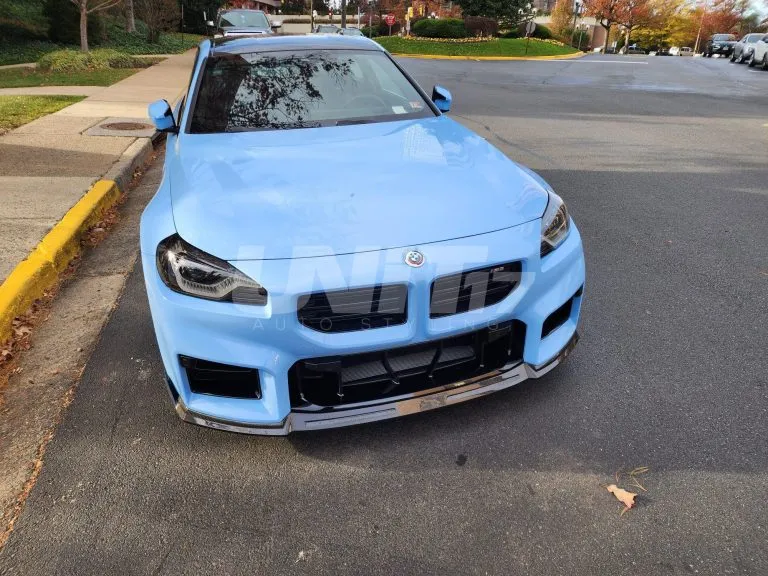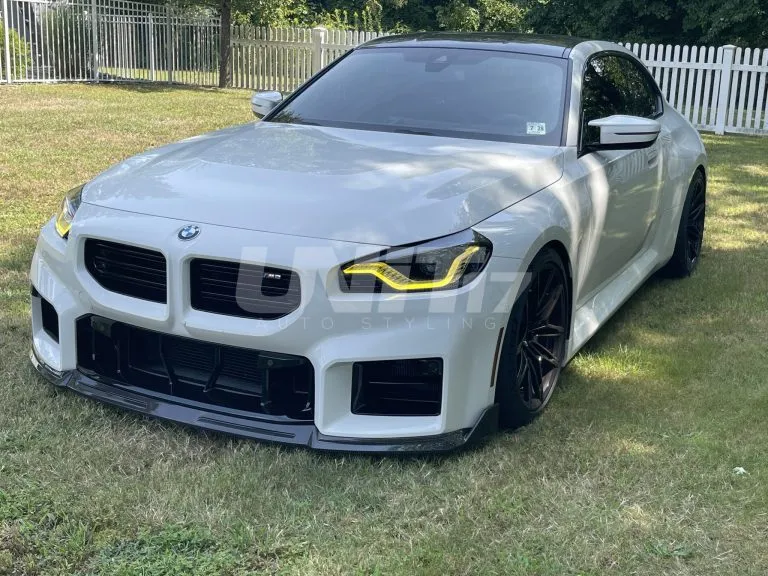
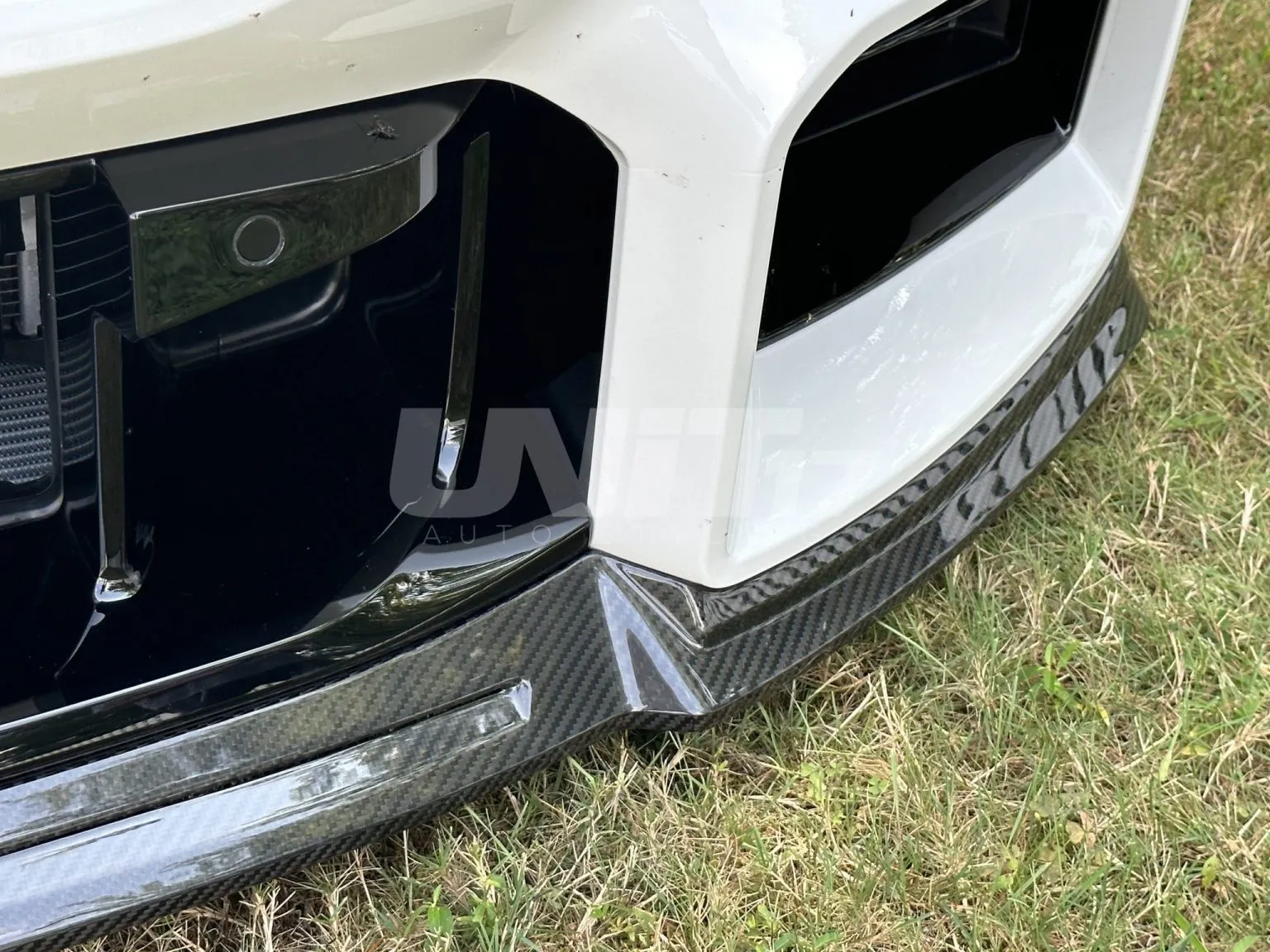
The carbon in a high-strength carbon fiber part starts life as a plastic fiber. In short, here’s how carbon fiber is made: a fiber called PAN is spun and stretched, baked in air until it turns black, then heated to well over 1,000 °C with no oxygen until it’s almost pure carbon. That fiber is woven into cloth. A parts maker turns that cloth into a car part one of three ways: prepreg cured under heat and pressure, wet layup by hand, or forged carbon pressed in a hot mold.
We sell carbon parts for BMW M cars and the Audi RS3, so further down we cover price, how to tell the types apart and what our own parts are made of.
Key takeaways
- High-strength carbon fiber starts as PAN, an acrylic fiber. It’s heated in air, then at 1,200 to 1,400 °C with no oxygen.
- Car parts are then made in three main ways: prepreg, wet layup and forged carbon.
- “Dry carbon” is shop talk for prepreg. It doesn’t mean matte.
- The cost comes from the fiber, the furnaces and autoclaves, frozen prepreg with a short life, and hand work.
- Our best-selling parts are listed as prepreg dry carbon fiber.
What is carbon fiber made from?
The preferred starting fiber is polyacrylonitrile, or PAN, an acrylic. Hexcel, a large fiber maker, says its HexTow fiber is made “in a continuous operation in which polyacrylonitrile precursor undergoes a series of precisely controlled oxidation and carbonization processes” (Hexcel HexTow guide).
Rayon and pitch can also be used, but an engineering course from IIT Delhi calls PAN-based fibers the strongest available (NPTEL, IIT Delhi). The course also gives the carbon yield of each: 50 to 55% of the fiber’s weight for PAN, about 30% for rayon and about 80% for pitch.
How carbon fiber is made, step by step
Temperatures are from the IIT Delhi course; the last step is from Hexcel.
| Step | What happens | Heat |
|---|---|---|
| Spinning | PAN is spun into fiber and drawn (stretched) at least 12 to 16 times | None listed |
| Stabilizing | Heated in air to form a heat-stable structure; the fiber turns yellow, then brown, then black | 180 to 300 °C (356 to 572 °F) |
| Carbonizing | Heated with no oxygen; nitrogen, hydrogen and hydrogen cyanide are driven off | 1,200 to 1,400 °C (about 2,190 to 2,550 °F) for high-strength fiber |
| Surface treatment and sizing | Treatment helps resin bond; a coating called sizing makes the fiber easier to handle | None listed |
After carbonizing, the course says “only carbon and some nitrogen (~6%) are left.”
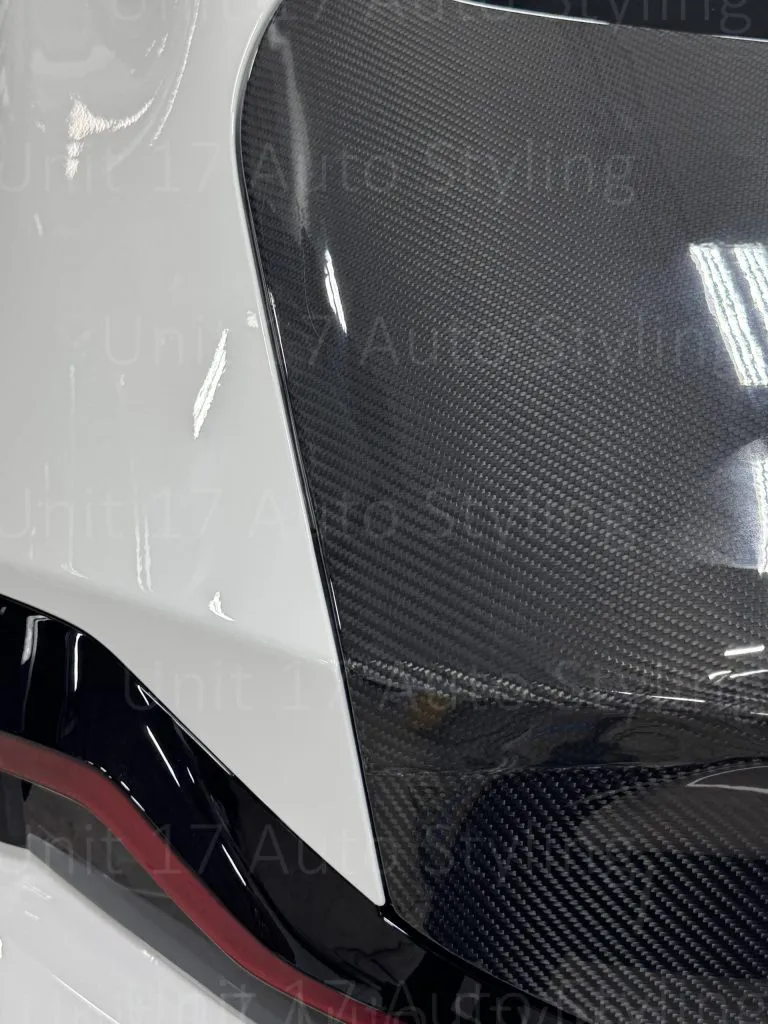
The fiber comes in bundles called tows. Hexcel’s guide says smaller tows such as 3K (3,000 filaments) or 6K (6,000 filaments) “might be used for woven materials.” Many of our listings name a 2×2 twill weave. Under a gloss clear coat it shows up as fine diagonal lines, as our MP style diffuser listing puts it.
From cloth to car part: the three methods
To make a stiff part you need resin, usually epoxy, and a mold. The three methods differ in how the resin gets into the cloth and how it cures.
Prepreg, cured in an autoclave or oven
Prepreg is short for pre-impregnated: the cloth arrives with the resin already in it, at a set ratio. Hexcel’s HexPly M49 is one prepreg resin sold for performance cars and “carbon look” parts, and its data sheet shows how tightly the process is run:
- It’s stored frozen. Shelf life is 12 months at -18 °C (0 °F), and it gets only 30 days at room temperature before it must be cured.
- The cure: full vacuum, 7 bar of pressure (about 100 psi), and 120 °C (248 °F) held for 60 minutes.
- For carbon look parts, Hexcel recommends the autoclave, a heated pressure vessel.
- The resin share is even written into the product code: 42% on its 2×2 twill versions.
The vacuum bag and the autoclave press the layers together. CompositesWorld notes that bagging “significantly reduces voids,” meaning trapped air. Some prepregs cure in an oven with no autoclave, which CompositesWorld calls “less capital-intensive.”
Our V3 front splitter listing describes it as “pre-impregnated carbon fiber, cured under heat and pressure in an autoclave.”
Wet layup
Wet layup starts with dry cloth. In CompositesWorld’s words, “each ply is coated with resin and debulked (compacted) after it is placed,” often by hand with rollers. The resin can then cure at room temperature. That means the person at the bench decides how much resin goes in, where prepreg has it fixed at the factory.
Done carefully, wet layup can turn out well. A Plymouth University course cites research where wet layup under a vacuum bag reached up to 58% fiber by volume with under 2% voids. Our side skirt extensions V2 listing calls wet carbon “the heavier process.”
Forged carbon
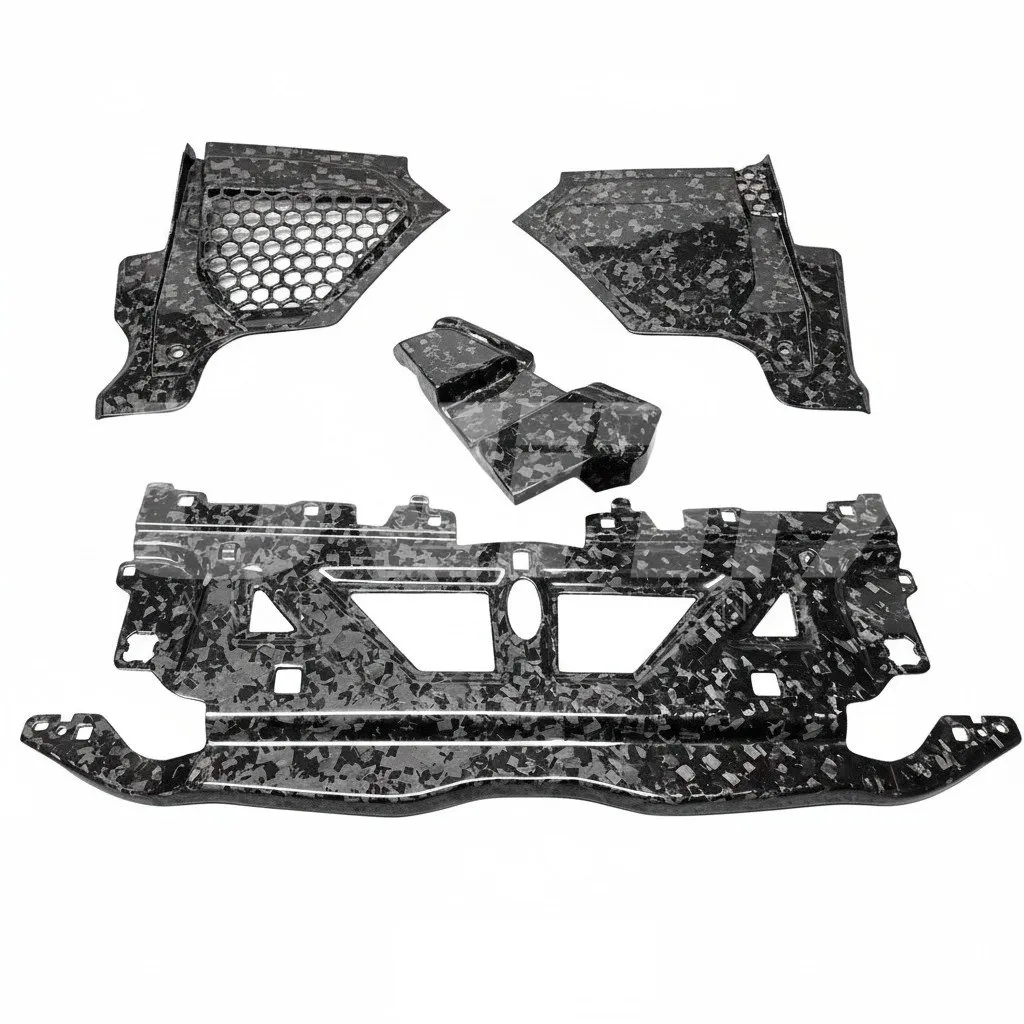
Forged carbon uses short, chopped fiber instead of woven cloth. Lamborghini, which sells its version as Forged Composites, publishes the steps in a technical sheet. The material is “a ‘pre-impregnated’ roll of short carbon fiber immersed in a resin film.” It’s cut, weighed and placed in a steel mold. The mold is pressed at 135 °C (275 °F) and 80 bar (about 1,160 psi), and the whole cycle takes under 5 minutes.
Lamborghini lists the tradeoffs too: the same density as prepreg and high resistance to flaws and damage, but “lower resistance than preimpregnated composite.” The sheet says it suits complex shapes with ribs and undercuts.
Prepreg vs wet layup vs forged carbon
| Prepreg (dry carbon) | Wet layup | Forged carbon | |
|---|---|---|---|
| Fiber | Woven cloth | Woven cloth | Short chopped fiber |
| Resin | Set at the factory | Added by hand | Set at the factory, in a film |
| Cure | Vacuum bag, heat, autoclave or oven | Can cure at room temperature | Steel mold, 135 °C, 80 bar |
| Equipment | Autoclave or oven; autoclaves are costly to run | Rollers and a mold | Matched steel molds and a press |
| Look | Woven pattern | Woven pattern | Marbled, no weave |
What does “dry carbon” mean?
“Dry carbon” is shop talk, not a term Hexcel or Lamborghini use in the sheets we cite. Our listings use it for prepreg, because no wet resin is added at the bench.
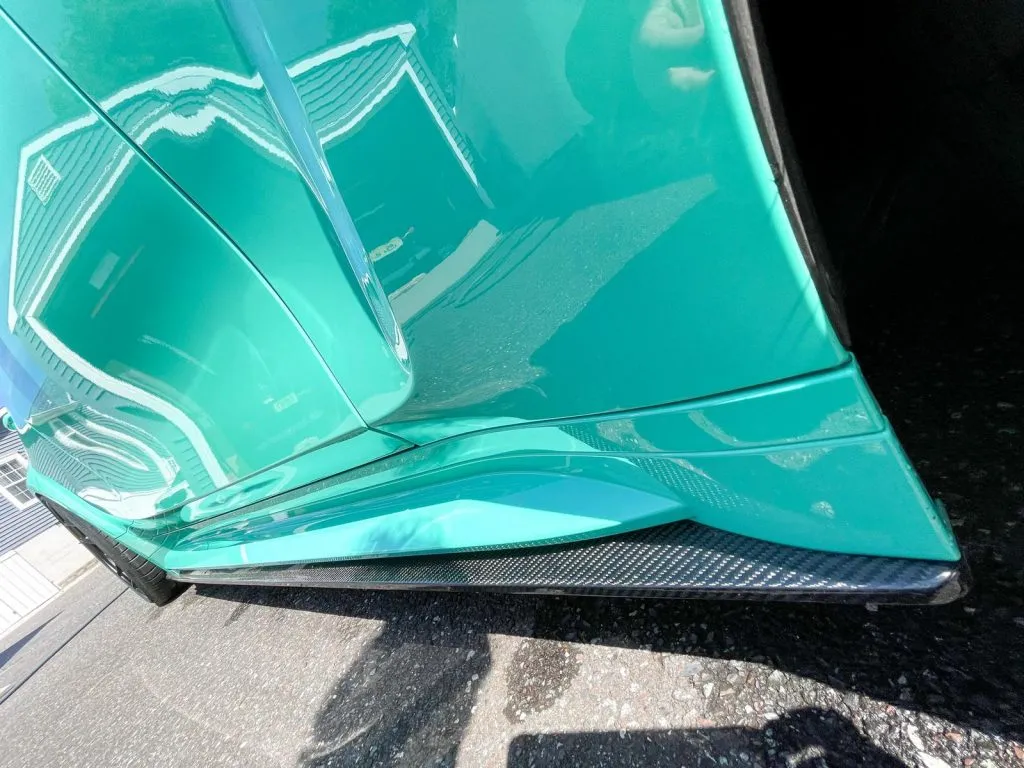
It isn’t a finish either. Gloss or matte describes the clear coat on top, whatever method made the part underneath. Our side skirt extensions V2 are 100% prepreg dry carbon fiber, shown in gloss, and you can ask for matte when you order. If a listing just says “dry carbon,” ask whether it’s prepreg and how it was cured.
Why carbon fiber costs what it does
Carbon fiber cost starts before any part is made. C. David Warren of Oak Ridge National Laboratory wrote in CompositesWorld that “the greatest contributors to high cost in carbon fiber production are the precursors and the capital equipment necessary for conversion.” On top of that, about half the PAN’s weight is lost in the furnace in the furnace.
Making the part adds more cost:
- Prepreg must be kept frozen and used within its out-time, 30 days at room temperature for M49.
- Autoclaves “are expensive to buy and operate,” says CompositesWorld.
- Forged carbon needs matched steel molds and a press, per Lamborghini’s sheet.
Forged carbon isn’t always the cheaper choice, either. On our engine bay cover set for the G80, G82 and G87, forged is a finish choice and costs more. At the time of writing (October 2026), the engine cover is $449 in gloss or matte and $529 in forged. The full set is $2,080 or $2,580. Prices change, so check the product page.
How to tell prepreg, wet layup, forged and fake apart
- Forged carbon is the easy one to spot: it has a marbled pattern and no weave.
- Look for pinholes. Our M2 SPL1 listing says prepreg “cures in a mold under vacuum, leaving fewer pinholes and a cleaner finish.”
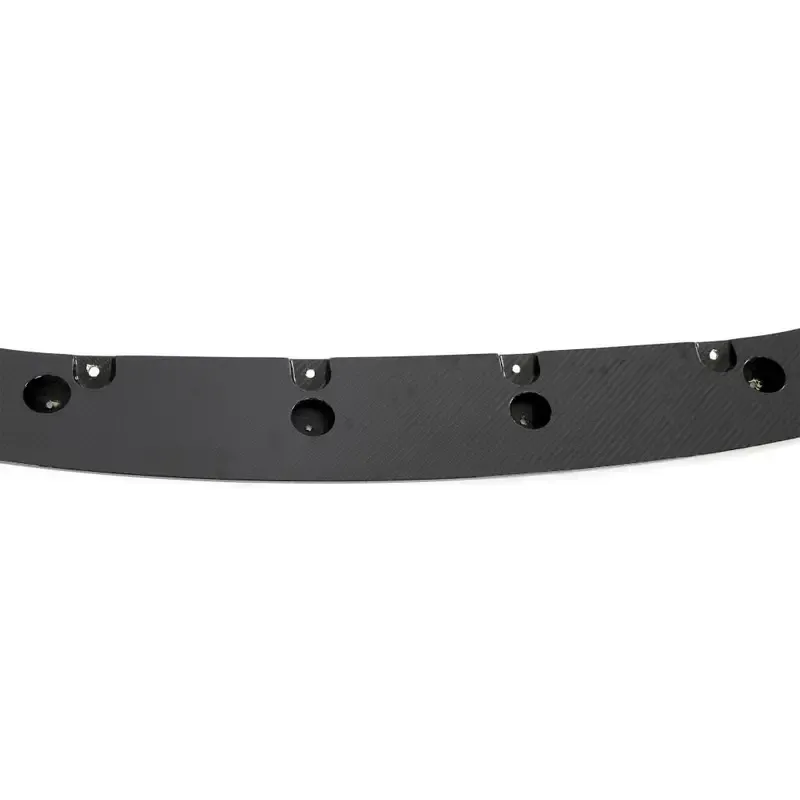
- Turn the part over and look at the back and the mounting holes. You want carbon all the way through. Our diffuser listings warn that cheaper diffusers can be “fiberglass hidden between carbon layers.”
- Ask what’s under the clear coat. Our CSL style grille listing notes that some cheaper grilles are “molded ABS plastic, painted gloss black or given a carbon-look finish.”
Before you buy any carbon part, ask the seller: prepreg or wet layup? How was it cured? Carbon all the way through? Does it fit your chassis code and year? What does the warranty cover?
What our carbon parts are made of
| Part | Fits (per listing) | What the listing says | Price (Oct 2026) |
|---|---|---|---|
| OEM++ front lip splitter SPL1 | G80 M3, G82/G83 M4 | Prepreg dry carbon, gloss | $999 |
| 1-piece front splitter V3 | G80 M3, G82/G83 M4 | Autoclave-cured prepreg | $999 |
| MP style rear diffuser | G80 M3, G82/G83 M4 | Autoclave-cured prepreg | $629 |
| M2 OEM+ front lip SPL1 | G87 M2 | Prepreg, cured in a mold under vacuum | $1,050 |
| Side skirt extensions V2 | G80 M3, G82/G83 M4 | 100% prepreg, gloss or matte | $1,050 |
| M2 CSL style trunk V1 | G87 M2 | Pre-preg dry carbon | $1,995 |
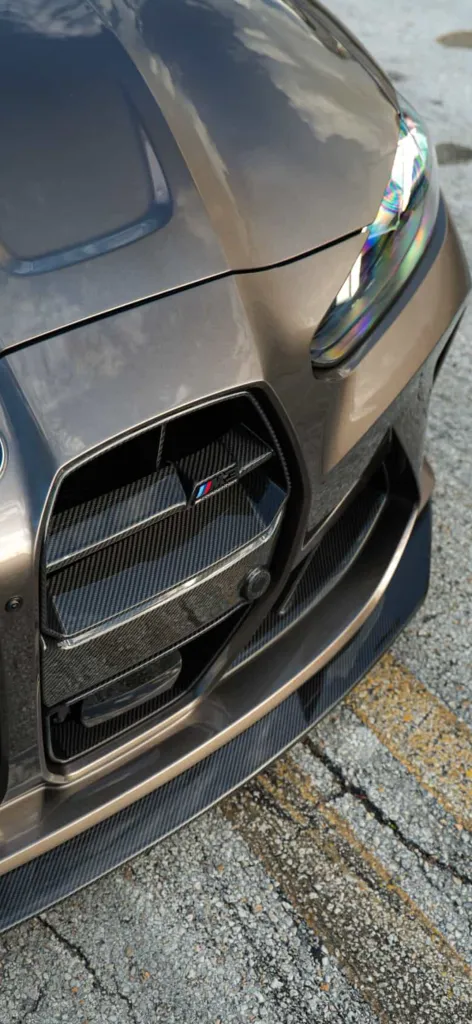
The SPL1 is our best-selling front lip. To keep a carbon finish looking new, see our guide to carbon fiber care, yellowing, ceramic coating and PPF.
Frequently asked questions
Who invented carbon fiber?
Physicist Roger Bacon made the first high-performance carbon fibers in 1958, at Union Carbide in Parma, Ohio. He spotted them while measuring the triple point of graphite. Today’s strongest fibers are made from PAN.
Is carbon fiber stronger than steel?
Hexcel describes its carbon fiber as “stronger than steel, lighter than aluminum and as stiff as titanium.” That’s the bare fiber. A finished part also contains resin, so its strength depends on the layup and the cure.
What is the downside of carbon fiber?
Cost, mostly. The fiber, the furnaces and the autoclaves all add to the price. Our SPL1 listing also notes that cheaper clear coats can yellow over time. Like any body part it can also be damaged, and our warranty doesn’t cover accidents, impacts or road debris.
Is dry carbon better than wet carbon?
Dry carbon usually means prepreg: resin measured at the factory, cured under vacuum and heat. Wet layup adds the resin by hand, so the result depends on the shop doing it. Our listings describe prepreg as the lighter, stiffer option.
Is forged carbon as strong as regular carbon fiber?
Lamborghini’s own sheet says its Forged Composites has the same density as prepreg but lower resistance than a prepreg composite. On our engine bay covers, forged is offered as a finish option alongside gloss and matte.
Which carbon should you choose?
Our best-selling exterior parts are listed as prepreg dry carbon. Browse carbon fiber styling parts, front lips and splitters, diffusers, side skirts and engine bay carbon. Or shop by car: G80 M3 and G87 M2.
If a part doesn’t fit the vehicle listed on its product page, contact us before installing and we’ll cover the return shipping for a refund or replacement. Most orders ship within 5 business days. Our 1-year warranty covers defects in materials and workmanship. Not sure which part or finish you need? Text us at 609-525-4865.