Carbon fiber yellowing is a sunlight problem. UV light slowly works on the epoxy resin the weave sits in and on the clear coat over it, and those are the layers that change color. The black fibers stay black. Prevention comes down to buying parts with a UV-resistant clear coat, washing them gently, and adding a layer on top that takes the sun and grit so the carbon doesn’t have to.
We’ll go through how to wash and polish carbon, what ceramic coating and paint protection film (PPF) each do, and what you can do if a part has already turned yellow.
Key takeaways
- Yellowing happens in the resin and clear coat. The carbon fibers themselves resist UV.
- A UV-resistant clear coat is the first line of defense. Many of our listings state one, so check the product page.
- Wash by hand, in the shade, with two buckets and a pH-balanced car shampoo. Don’t use dish soap.
- Ceramic coating makes carbon easier to clean and adds UV protection, but it won’t stop stone chips. PPF will.
- Satin PPF makes gloss carbon look satin. On matte carbon, skip polish and wax.
- Light haze can often be polished out. Deep yellowing means sanding and re-clearing, or a new part.
Does carbon fiber turn yellow?
The resin and clear coat can. The fibers don’t. BASF, which makes UV absorbers for coatings, puts it plainly: the aromatic epoxy matrix around the carbon weave is sensitive to sunlight. Epoxy makers say the same about their own product. West System, the boatbuilding epoxy brand, tells customers that paint or varnish goes over epoxy to protect it from sunlight.
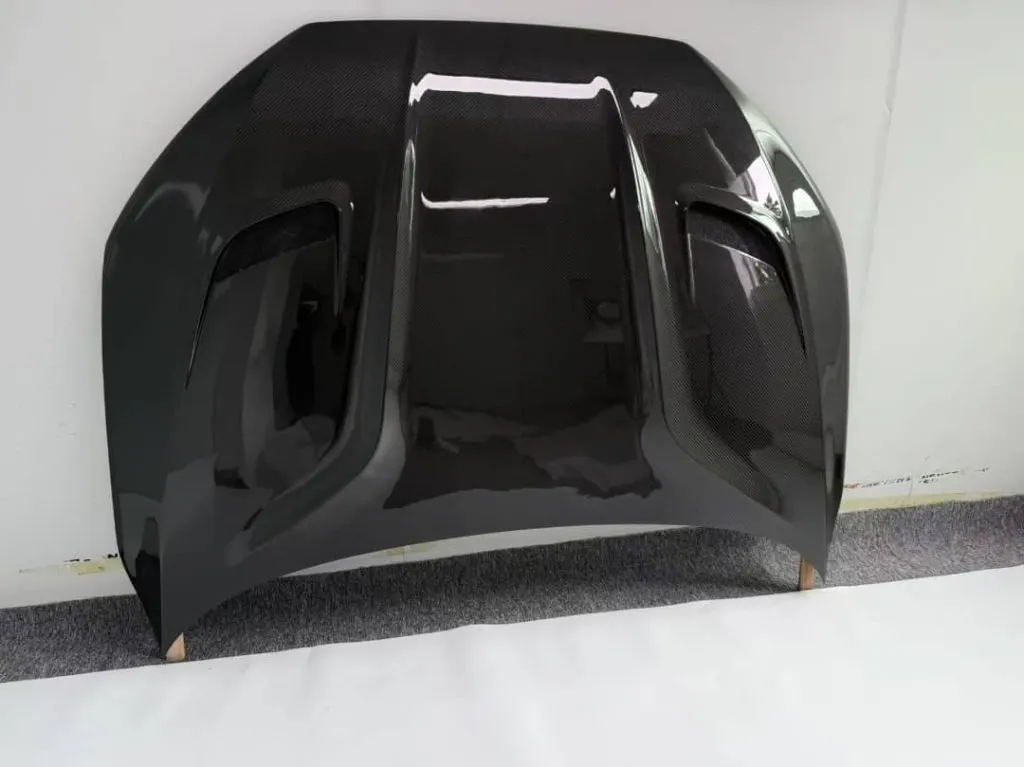
When it starts, you see a yellow or amber tint, less gloss, a cloudy or hazy look and a weave that looks less sharp. Direct sun and heat speed it up. Hoods and roofs come up a lot: both appear in Google’s suggestions for “carbon fiber yellowing”.
A good clear coat slows this down. Mipa’s technical data sheet for its carbon clear coat says its high UV protection keeps “substrates with a tendency to yellowing (including carbon substrates)” from weather-related discoloration.
What prepreg changes, and what it doesn’t
Prepreg carbon arrives with a factory-controlled amount of resin and cures under heat and pressure in an autoclave. Wet-layup parts get their resin by brush or roller and usually carry more of it. We cover the full difference in prepreg vs wet-layup carbon fiber.
On our own listings we point out that cheaper wet-carbon copies can yellow in the sun. Whatever the process, though, the clear coat is what sits between the sun and the resin, so check that the listing says UV-resistant. Our G87 M2 CSL style grille, for example, is listed with “a durable, UV-resistant clear coat to prevent fading and yellowing over time.” If a listing doesn’t mention UV protection, text us and ask before you order.
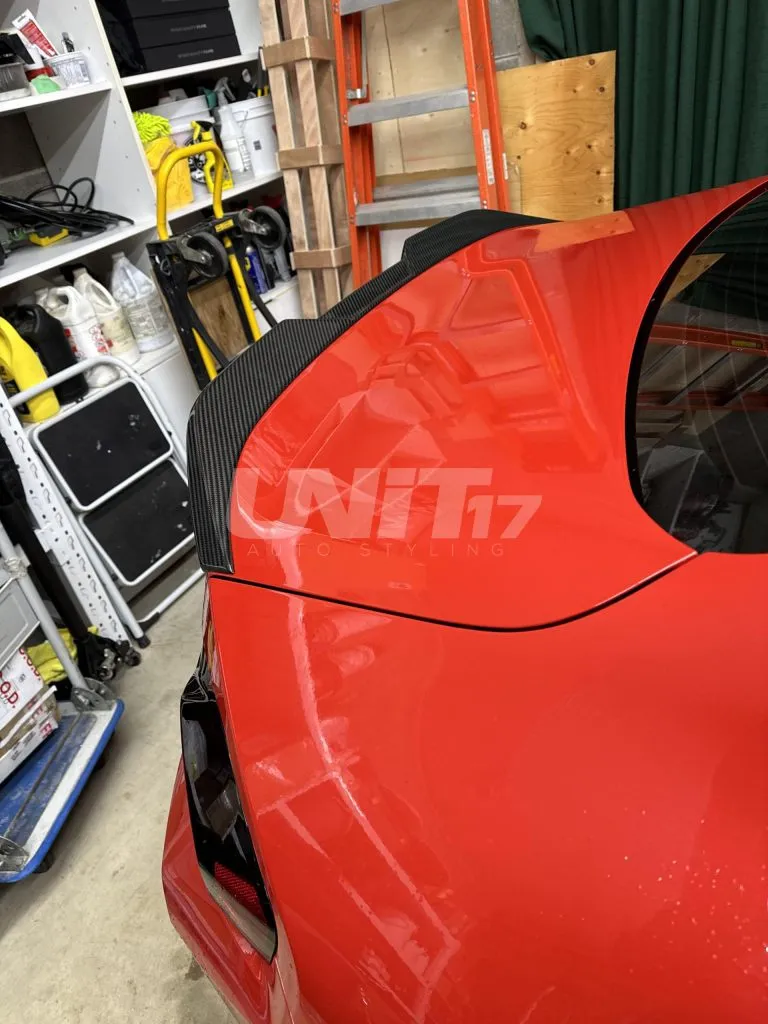
How to clean carbon fiber parts without hurting the finish
Wash clear-coated carbon the way you’d wash good paint, gently:
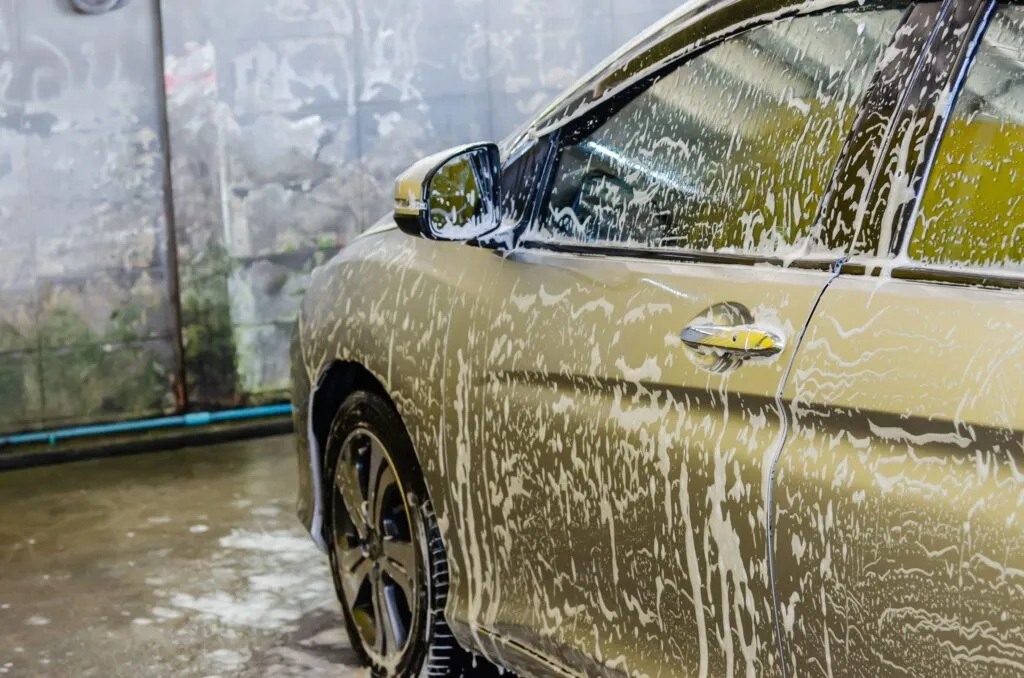
- Wash in the shade. Mothers says to avoid direct sunlight and never wash a car that’s hot. Let engine-bay carbon cool down too.
- Use two buckets: one with car shampoo, one with plain water to rinse the mitt before it goes back in the soap. A grit guard at the bottom of the bucket traps the dirt.
- Use a pH-balanced car shampoo. Mothers points out that dish detergents are made to remove grease and wax, so they strip your protection too.
- Use a microfiber or lamb’s wool mitt, and start at the roof and work down. The lowest panels are the dirtiest, so front lips, side skirts and diffusers come last.
- Dry with a waffle-weave microfiber towel in straight passes, not circles.
Skip the brush car wash. XPEL warns that frequent use of automatic washes with harsh brushes can damage PPF over time, and BMW’s care rules for its matte Frozen paint ban any mechanical or automated cleaning.
Polishing light swirls on gloss carbon
Fine swirls and a dull, hazy look sit in the very top layer. 3D Car Care’s carbon guide calls that haze “the top layer of epoxy, resin or gel that has been oxidized,” and its fix is to polish that layer off. Polish works by removing material, so go easy.
Auto Finesse uses a light all-in-one polish for “oxidation and light swirls” and saves its cutting compound for heavy restoration. That’s the order we’d follow too: try the mildest product first.
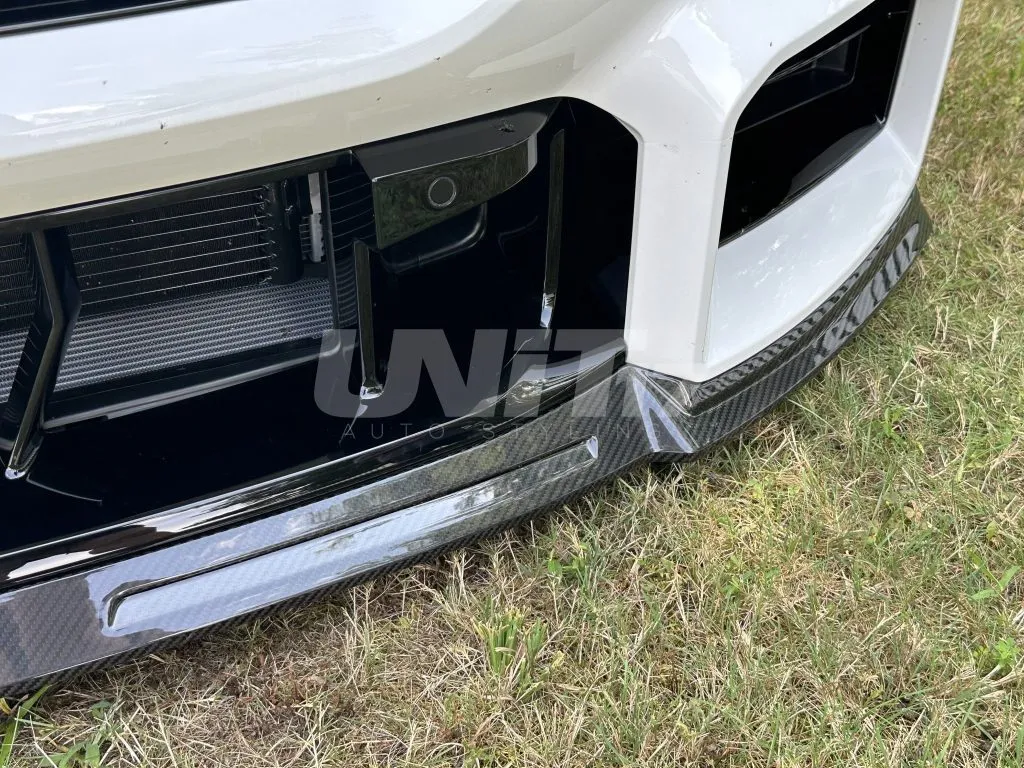
Polish won’t fix scrapes, chips or exposed weave. Those need a repair, and 3D’s guide leaves them out. To keep a lip off curbs in the first place, see will a front lip scrape?
Matte carbon is different
Don’t polish or wax matte carbon. BMW’s rules for its Frozen matte paint are a good guide: no polish, no wax, no mechanical cleaning, and remove bug remains and tar right away. Polish and wax add gloss, which is the opposite of what a matte finish needs.
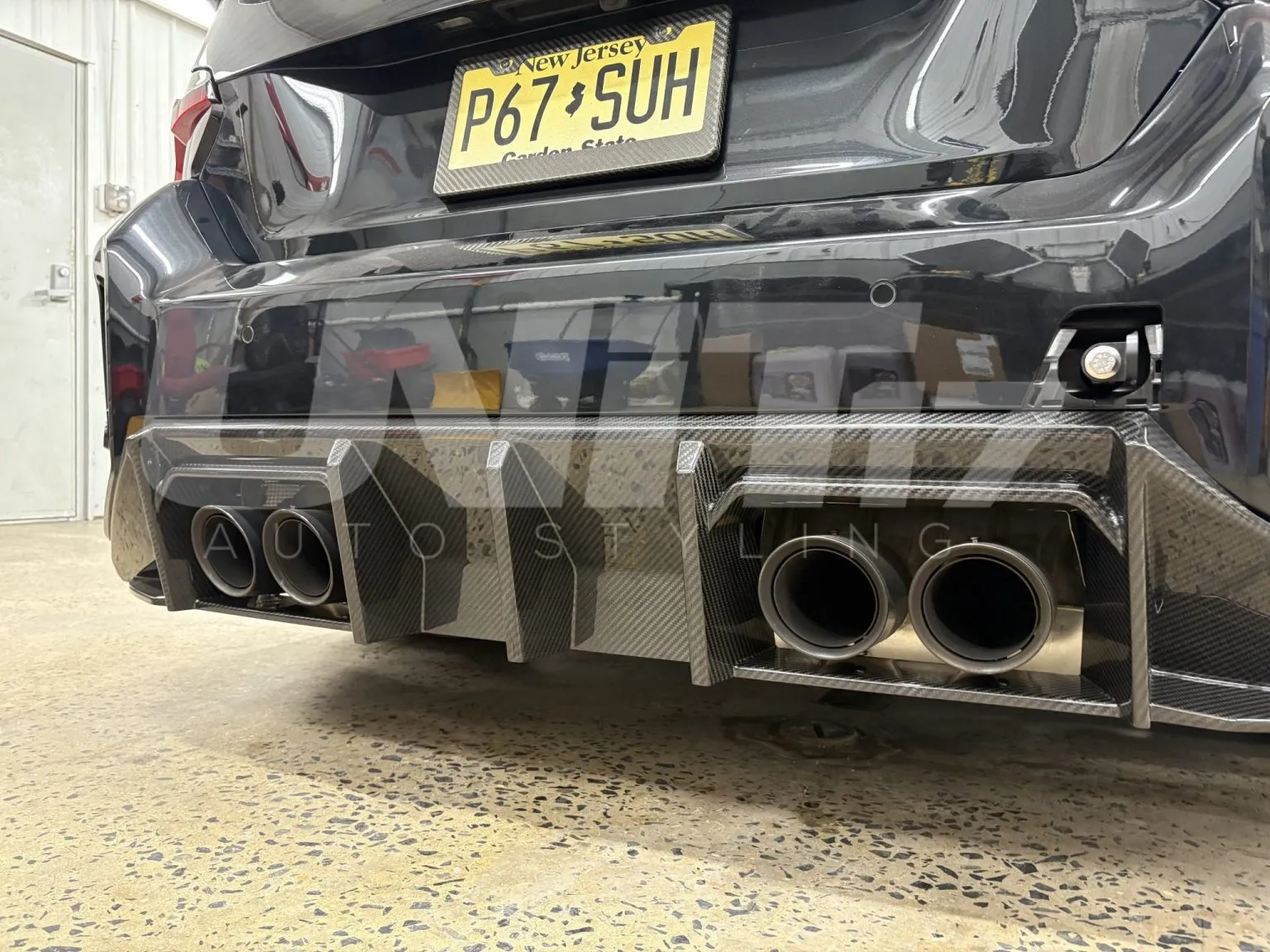
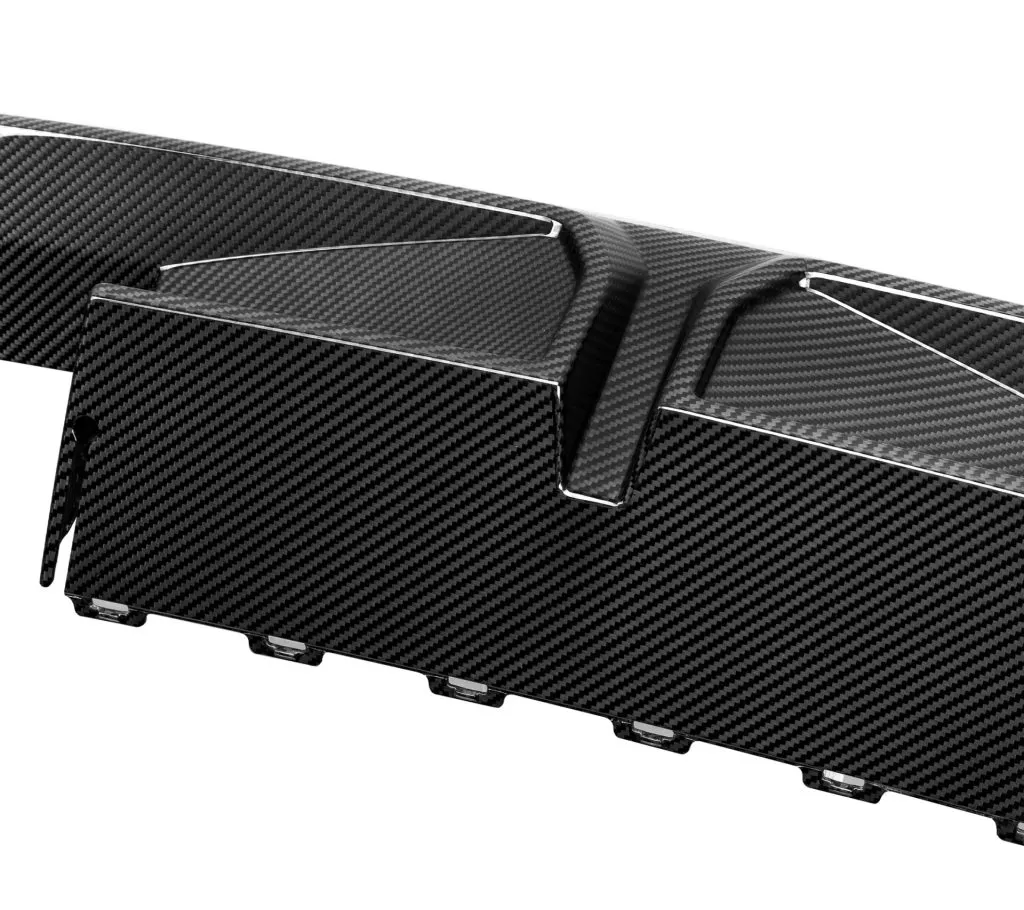
Some of our parts come in matte. The side skirt extensions V2 come in gloss or matte (tell us when you order), and the G87 M2 CS style diffuser is listed with a matte or gloss PPG clear coat.
Can you ceramic coat carbon fiber?
Yes. Auto Finesse calls a ceramic coating “by far the best way to add durable protection on any carbon fibre part.” XPEL lists two benefits: a hydrophobic surface that repels water, dirt and contaminants, and a layer that shields paint from UV damage.
A coating won’t stop stone chips, though. XPEL says PPF is “generally better for preventing physical damage like scratches and chips due to its thicker, impact-resistant layer.”
On matte or satin carbon, use a coating made for matte. Gyeon says its Q² Matte EVO protects matte and satin paint, PPF and vinyl “without altering the original appearance,” with a lifespan of up to 24 months.
PPF on carbon fiber: hood, lip and side skirts
PPF is a clear urethane film. XPEL’s main gloss film is 8 mil thick, and XPEL says its films protect against scratches, chips and UV damage. Its 10-year limited warranty covers the film against yellowing, blistering, cracking and delamination.
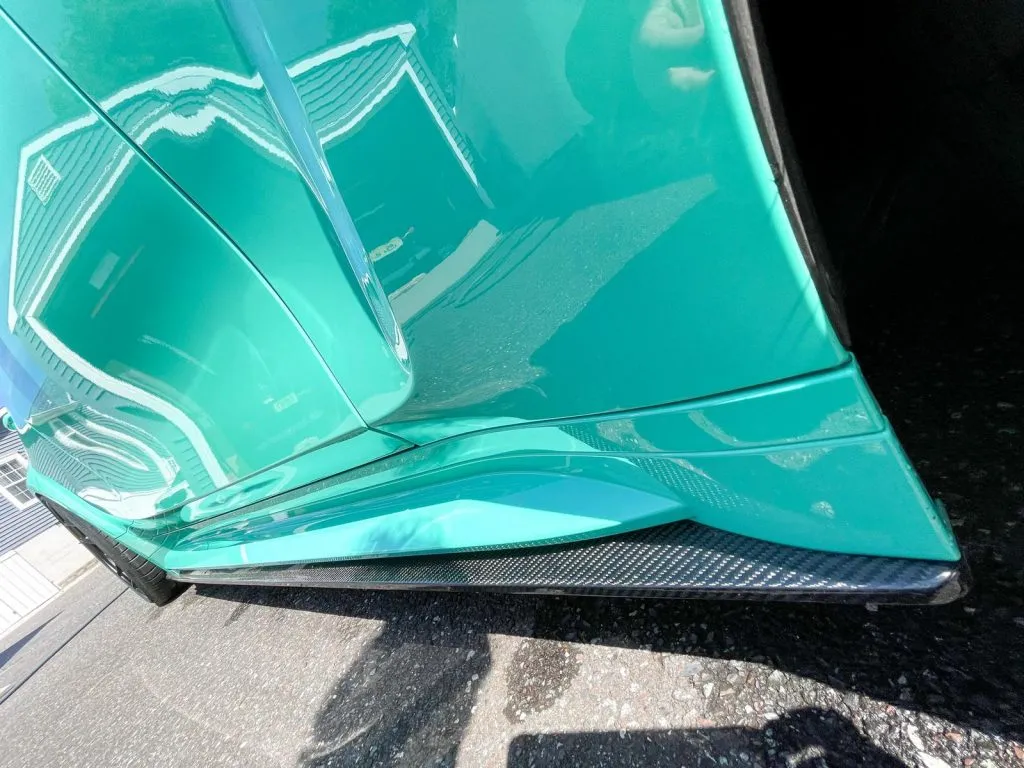
Film makes the most sense where stones hit: front lips, side skirts, the front edge of a hood. Our warranty doesn’t cover road debris, so film is how you protect against it.
The film’s finish changes the look:
- Gloss film keeps gloss carbon glossy.
- Satin film turns it satin. XPEL says its STEALTH film “transforms glossy paint into a matte look,” and its data sheet rates the film under 25 gloss units.
- On brushed finishes, XPEL notes that clear film adds a slight gloss and recommends STEALTH instead. We’d apply the same thinking to matte carbon.
After install, XPEL says to wait 72 hours before washing. You can also ceramic coat over PPF. Prices vary by installer and by part, so get a local quote.
| Ceramic coating | Gloss PPF | Satin PPF | |
|---|---|---|---|
| Stops stone chips | No | Yes | Yes |
| UV protection (maker’s claim) | Yes | Yes | Yes |
| Look on gloss carbon | Stays glossy | Stays glossy | Turns satin |
| On matte or brushed finishes | Use a matte-specific coating | Adds a slight gloss | XPEL’s pick for brushed finishes |
| Can be combined | Can go on top of PPF | Can be ceramic coated | Can be ceramic coated |
Can yellowed carbon fiber be fixed?
Sometimes, depending on how deep it goes. If it’s surface haze, polish may bring most of it back. Auto Finesse says polishing carbon fibre lets you recover 80% of the surface, and adds that “only those with critical eyes may still notice the yellowish tint.”
If the color has gone deep into the resin, polishing won’t reach it, and refinishing gets harder and more expensive. A refinish means wet sanding the old clear and spraying a new one, ideally a clear made for composites like the Mipa product above. Its data sheet has you sanding and polishing once it has dried. That’s paint-shop work. Ask the shop for a quote and compare it with the price of a new part.
Use a UV-resistant clear for the refinish and protect it afterward, because the part will be sitting in the same sun that yellowed it.
What our warranty covers
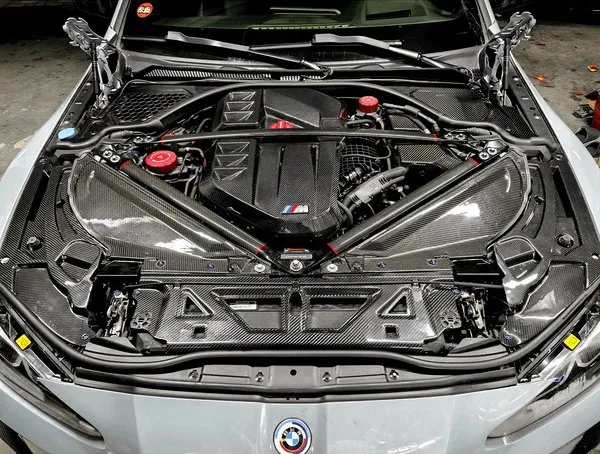
Our warranty runs 1 year and covers defects in materials and workmanship. It does not cover accidents, impacts or road debris, or damage from improper installation.
Plan the order of jobs, too. Returns are accepted for 14 days on uninstalled parts, and painted or installed parts can’t be returned. So check the part, and test fit it, before it goes to the installer for film or a coating. Our fitment guarantee: “If a part doesn’t fit the vehicle listed on its product page, contact us before installing and we’ll cover the return shipping for a refund or replacement.”
Frequently asked questions
Does carbon fiber turn yellow in the sun?
The carbon fibers don’t, but the epoxy resin and clear coat around them can. UV light breaks them down over time and leaves a yellow or amber tint. A UV-resistant clear coat and a protective layer on top slow that down.
Can you fix carbon fiber yellowing?
Surface haze can often be polished out, though a faint tint may remain. Deep yellowing needs a paint shop to wet sand the old clear and spray a new UV-resistant one.
Can you ceramic coat carbon fiber parts?
Yes. A ceramic coating adds a hard, slick layer over the clear coat that is easier to clean and adds UV protection. It doesn’t stop stone chips. On matte carbon, use a matte-specific coating.
Is PPF on a carbon fiber hood worth it?
If the hood takes stones at highway speed, yes: film is the option that stops chips. Gloss film keeps the gloss, and satin film turns gloss carbon satin.
How do you clean matte carbon fiber?
Hand wash with a pH-balanced shampoo, two buckets and a soft mitt, and remove bugs and tar right away. Don’t polish or wax it, and skip automatic car washes.
Can I use dish soap on carbon fiber?
No. Dish detergent is made to cut grease and wax, so it strips the protection on your clear coat. Use a pH-balanced car shampoo instead.
Which protection should you choose?
Keep it simple: wash the right way, keep a coating on gloss parts, and put film on whatever sits in the line of fire: the front lip, side skirts and hood. Matte parts get a matte coating or satin film, and no polish.
When you buy, look for prepreg carbon and a clear coat the listing describes, like our OEM++ rear spoiler (prepreg dry carbon under a gloss clear coat) or our G87 M2 3-piece diffuser. Browse all our carbon fiber styling parts and carbon hoods. Questions about a part’s finish? Text us at 609-525-4865.